
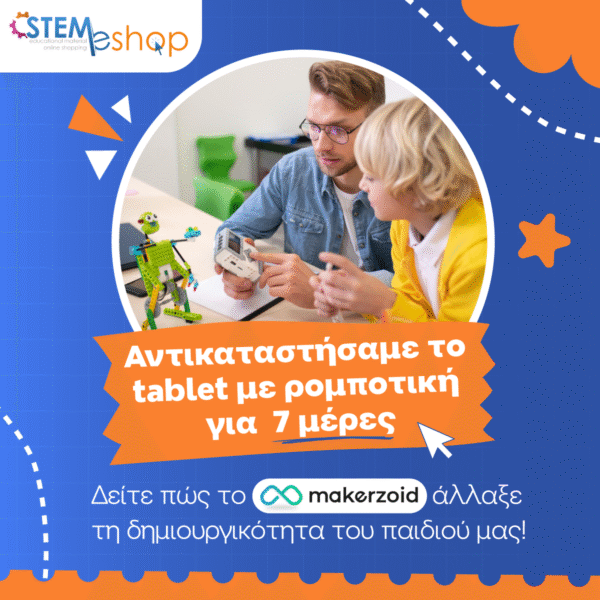
Cultivating Scientific Thinking through Play
Scientific thinking is not just a body of knowledge; it is a way of understanding the world based on observation, interpretation, hypothesis-forming, and experimentation. To be effectively cultivated in students, a learning environment is needed that encourages active participation and creative thinking. In this context, classroom play, and especially STEM games, are a valuable tool for the teacher.
What do we mean by “scientific thinking”?
Scientific thinking includes:
- Observational ability
- Formulating questions and hypotheses
- Data collection and analysis
- Testing solutions and evaluating results
- Interpretation and drawing conclusions
These skills are not developed only through theoretical teaching, but mainly through practical application. That's where games make the difference.
How play contributes to the cultivation of scientific thinking
- Simulation of scientific processes
Many STEM toys offer children the opportunity to replicate the scientist's methodology. For example:
- In physics and chemistry kit, students observe, make hypotheses, experiment, and evaluate the results.
- Games with programming, such as Botley or Scratch, They teach them to think logically and evaluate the outcome of each command.
- Play as a framework for authentic learning
Through role-playing, strategy or collaborative games, students face real-life problems, which enhances authentic learning.
- For example, in a “laboratory” type game, students may play the role of biologists or engineers and must solve a problem by applying scientific principles.
- Developing critical thinking
Play stimulates children's natural curiosity. Through "why" and "how," they begin to formulate hypotheses and seek explanations.
- Games with unpredictable results or many possibilities, such as Snap Circuits, challenge children to try different versions and compare results.
- Teamwork and collaborative learning
Scientific thinking often works best through collaboration. Play promotes interaction, discussion, and the exchange of ideas.
- Games like Collaboration and Teamwork
can be used in small groups, encouraging students to jointly design and verify strategies.
Practical ideas for the classroom
- STEM learning corners: Organize corners with different STEM materials, where students can experiment freely.
- Weekly STEM Challenge: Each week, provide a challenge that requires logic, construction, or experimentation.
- Thought recording: Ask students to record what they assume, what they observed, and what they conclude from each game/activity.
Cultivating scientific thinking does not require expensive laboratories or sophisticated methods. It requires an environment that fosters curiosity, experimentation, and creative thinking. Through well-chosen STEM toys, students can approach science in an experiential, enjoyable, and meaningful way. The role of the teacher is crucial: to create the right conditions, to inspire, and to guide this learning process toward a future full of questions, answers, and creative discovery.
BLOG
Related Articles
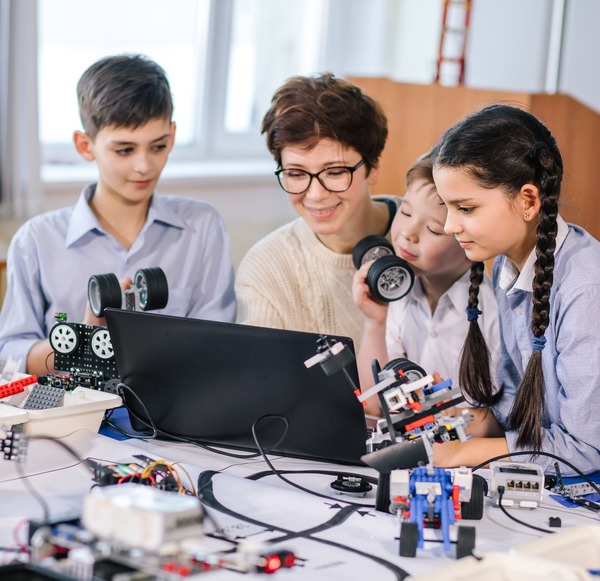
Γιατί τα STEM παιγνίδια είναι το καλύτερο “σχολικό εφόδιο” για τη νέα χρονιά
Antonis Chatzipetrou
September 3, 2025
No Comments

8 STEM Games to Keep Kids Creatively Engaged This Summer
Antonis Chatzipetrou
July 10, 2025
No Comments
Comments
Comment on the article
We would like to hear your opinions, please write us any comments you want regarding this article so that we can serve you as best as possible.